
Buy vs Rent in Reno (2026 Guide): What’s Smarter If You’re Moving to Northern Nevada?
If you're moving to Reno in 2026, one of the first questions you’ll ask is:
“Should I buy or rent in Reno?”
This decision is about more than just a monthly payment — it impacts your lifestyle, financial flexibility, tax strategy, and long-term wealth building.
With Reno continuing to grow in 2026 and more people relocating from California, Texas, Arizona, and the Pacific Northwest, understanding the Reno cost of living in 2026 is essential before you make a move.
This updated guide breaks down:
The real numbers in the 2026 Reno housing market
Renting vs buying cost comparisons
Long-term financial implications
What makes the most sense for relocating families and professionals
Why This Question Matters in the 2026 Reno Housing Market
Reno remains one of the most desirable cities in the West due to:
No state income tax
Expanding tech and logistics job growth
Proximity to Lake Tahoe
Outdoor lifestyle (300+ days of sunshine)
Lower density compared to California metros
However, strong demand continues to influence pricing.
Key Insight for 2026:
For most Reno households, housing makes up 35–45% of total monthly expenses.
That means choosing to buy vs rent can significantly impact your financial future.
Reno Cost of Living 2026: Housing Snapshot
While interest rates fluctuated through 2025, Reno’s housing market has stabilized into a more balanced but still competitive environment in 2026.
Estimated 2026 Market Averages (Reno/Sparks)
Median home price: Mid-$500Ks range
Average rent (2–3 bedroom): $1,900–$2,600/month
Property taxes: Relatively low compared to California
No state income tax advantage
(Exact numbers vary by neighborhood — South Reno, Sparks, and Northwest Reno differ significantly.)
Renting in Reno (2026): Flexibility with Fewer Long-Term Gains
Renting offers:
Lower upfront costs
Flexibility if relocating short-term
No maintenance responsibility
Easier mobility for job changes
Typical 2026 Renting Costs
First month’s rent
Security deposit (often 1 month)
Possible pet deposit
Renter’s insurance
Annual rent increases
While renting may cost slightly less month-to-month in some cases, the key downside is:
👉 You’re building zero equity.
In 3–5 years, that could represent six figures in missed appreciation depending on market growth.
Buying a Home in Reno (2026): Stability & Long-Term Wealth
Buying in 2026 offers:
Fixed mortgage payments (if locked in)
Protection against rising rents
Equity growth
Tax advantages
Long-term appreciation potential
Typical Upfront Buying Costs
Down payment (varies by loan type)
Closing costs (2–4%)
Home inspection
Appraisal
Moving expenses
While upfront costs are higher than renting, buyers gain:
✔ Ownership
✔ Appreciation
✔ Tax benefits
✔ Predictable payments
For many relocating families, buying makes more sense if you plan to stay 3+ years.
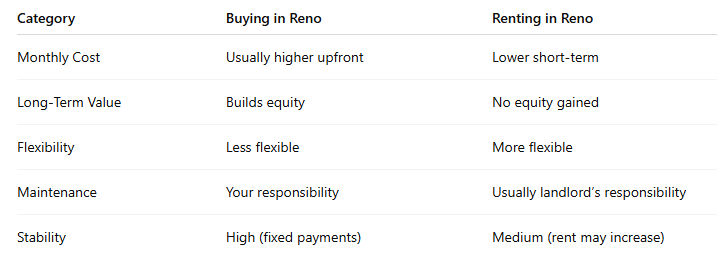
Buy vs Rent in Reno (2026): Quick Comparison
FactorRentingBuyingUpfront CostLowerHigherMonthly Payment StabilityVariableFixed (if fixed-rate loan)EquityNoneBuilds over timeMaintenanceLandlord handlesOwner responsibilityLong-Term WealthNo appreciationProperty appreciation
Who Should Rent in Reno in 2026?
Renting may make sense if:
You’re relocating temporarily
You’re unsure about neighborhoods
You plan to move again within 1–2 years
You want flexibility before committing
Many clients rent for 6–12 months while exploring South Reno, Sparks, or Northwest Reno before purchasing.
Who Should Buy in Reno in 2026?
Buying may make sense if:
You’re planning to stay 3–5+ years
You want predictable housing costs
You’re relocating from high-tax states
You’re focused on long-term wealth building
You want control over your living space
With continued inbound migration to Northern Nevada, long-term ownership remains a strong strategy.
Important 2026 Market Reality
The Reno market is no longer the ultra-frenzied environment of 2021–2022.
In 2026, we’re seeing:
More balanced inventory
Better negotiation opportunities
Seller concessions in some cases
Less extreme bidding wars
This makes 2026 one of the most strategic years to buy in Reno compared to recent peak years.
The Hidden Financial Factor: No State Income Tax
Many buyers relocating from California see immediate financial relief due to:
No Nevada state income tax
Lower property taxes compared to CA
Business-friendly environment
For higher-income earners and entrepreneurs, this can significantly offset mortgage costs.
Final Thoughts: Buy or Rent in Reno in 2026?
There isn’t a universal answer — it depends on:
Your timeline
Your financial goals
Your job stability
Your relocation plans
Your comfort with homeownership
But one thing is clear:
👉 Reno continues to be one of the strongest long-term housing markets in Northern Nevada due to lifestyle, tax advantages, and economic growth.
Moving to Reno in 2026? Let’s Build a Smart Plan
If you're relocating to Northern Nevada, I help clients:
Analyze buy vs rent scenarios
Compare neighborhoods
Understand local market trends
Run payment scenarios
Navigate relocation timing
Whether you’re coming from California, Texas, or another state, having a local Reno real estate expert makes all the difference.
📩 Reach out for a personalized 2026 housing strategy.
👉 Visit www.samsellsnv.com to find homes, compare prices, or schedule a free consultation today.
UIpdated Feb.13.2026